
|
by Alex Vikoulov  "Everything that rises must converge." –Pierre Teilhard de Chardin
The Omega Point cosmo-teleology emerges from the intersection of quantum cosmology, teleology, and complex systems theory. Originally conceptualized by French philosopher Pierre Teilhard de Chardin, the Omega Point envisions the universe evolving towards a state of maximum complexity and consciousness (Teilhard de Chardin, 1955). Such a state represents the ultimate goal and culmination of cosmic evolution, wherein the convergence of mind and matter leads to a unified superintelligence.
0 Comments
by Alex M. Vikoulov  “From the light came light, and from the dark came darkness, but from whence did they appear? Yin and Yang combine to create all things, but which is the source, and which was born from it?” ―Qu Yuan As we venture deeper into the labyrinth of cosmological mysteries, the concept of the Omega Point emerges not merely as a speculative idea but as a pivotal anchor in our quest to understand the telos of the Universe. This article introduces the Omega Point Cosmology, a framework that seeks to unravel the intricate tapestry of space, time, and consciousness. At the heart of this exploration lies the hypothesis that the cosmos is inexorably evolving towards an ultimate state of complexity and consciousness—the Omega Point where time and eternity converge, and where the multitudinous experiences of all sentient beings are integrated into a single, transcendent awareness. This journey into our forgotten future challenges the traditional notions of linear time and invites us to reconsider our role in a Universe where the future can influence the past, and where every step forward is a step into a vast, participatory cosmic evolution. by Alex M. Vikoulov  “Homo sapiens does its best to forget the fact, but it is an animal. And it is doubly important to remember our origins at a time when we seek to turn ourselves into gods.” –Yuval Noah Harari Humans are arguably the most peculiar species that has ever existed. Characterized by exceptionally large brains capable of abstract thought, invention, and sophisticated communication through language, humans are also notable for their near hairlessness, weak jaws, and disproportionately large reproductive organs. We are highly social and face unique challenges in childbirth. How did such an unusual species come to be?
We now know that all existing lifeforms stem from a solitary progenitor known as LUCA, or the Last Universal Common Ancestor. This perspective is perhaps the most cohesive view of life imaginable. Every living entity is connected back to this singular, simple cellular origin—the most fundamental root of the elaborate Tree of Life. Reversing life’s timeline, this microscopic entity appears as the initial spark of biological evolution, setting the stage for a dramatic unfolding over 3.5 billion years that leads to us. The Quest for Ultimate Reality: Exploring Experiential Nirvana as a Path to Self-Transcendence3/29/2023 by Alex Vikoulov  “Man suffers only because he takes seriously what the gods made for fun.” ―Alan W. Watts “What Nirvana?” you might immediately think, “there’s so much suffering in the world including ongoing problems in my own life!” According to Buddhist teachings, Nirvana is defined as a transcendent state in which there is neither suffering, desire, nor sense of self, and the subject is released from the effects of karma and the cycle of death and rebirth. Nirvana is thus associated with the highest state that someone can attain, a state of enlightenment. So, can the pursuit of experience lead to true enlightenment? Are we edging towards Experiential Nirvana on a civilizational level despite certain turbulent events?
by Alex Vikoulov 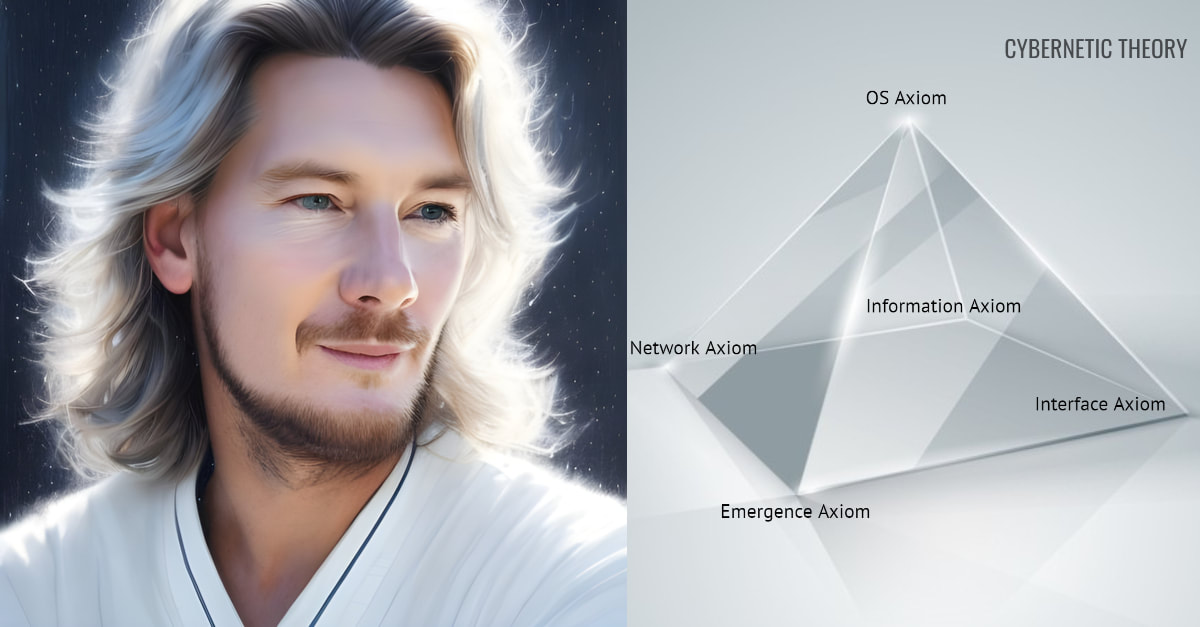 “To say that a world is objective means that the world’s existence does not depend on the agent.” ―Donald Hoffman The concept of relativity pervades the field of physics, as any viewpoint ultimately boils down to a dimensionless ratio. In the realm of physical reality, a viewpoint assumes the existence of an observer and their relationship to the observed object. However, the point of quantum uncertainty exists without any such viewpoint. The fabric of space-time is made up of points that only have speed and distance relative to other points viewing them, while the points themselves remain beyond observation. As quantum physicist Vlatco Vedral explains, there is no absolute space-time, as space and time emerge from a fundamentally spaceless and timeless foundation. This challenges our classical understanding of the universe as a fixed and measurable entity and highlights the crucial role of perspective in shaping our understanding of physical reality. by Elizabeth Titovskaya  “Most of the complexity of a human neuron is devoted to maintaining its life-support functions, not its information-processing capabilities. Ultimately, we will be able to port our mental processes to a more suitable computational substrate. Then our minds won’t have to stay so small.” ―Ray Kurzweil
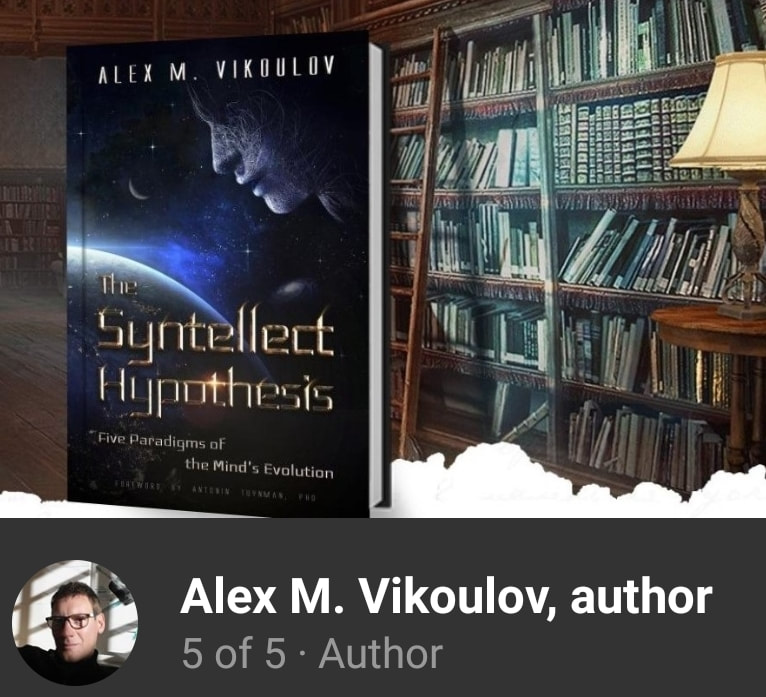
Local consciousness, or our phenomenal mind, is emergent, whereas non-local consciousness, or universal mind, is immanent. Material worlds come and go, but fundamental consciousness is ever-present, argues evolutionary cyberneticist and philosopher of mind Alex M. Vikoulov who is currently developing the Cybernetic Theory of Mind, his theory of everything. From a new science of consciousness to simulation metaphysics, from evolutionary cybernetics to computational physics, from physics of time and information to quantum cosmology, this novel explanatory theory for a deeper understanding of reality is combined into one elegant theory of everything. by Oberon Zell  "Evolution of consciousness is indeed a spiritual process as well as it is a never-ending process of rational discovery." ―Alex Vikoulov Following is the review of The Syntellect Hypothesis: Five Paradigms of the Mind's Evolution (2020) by Alex M. Vikoulov This is a brilliant and complex book with a vast scope, and consequently a challenge to review in a few paragraphs. It’s an entire graduate University course in 525 dense pages! I found myself taking copious notes and copying many paragraphs I may wish to quote in my own books on these topics. Indeed, I discovered herein quotations from my own writings of over 50 years ago! |

Categories
All
Recent Publications The Cybernetic Theory of Mind by Alex M. Vikoulov (2022): eBook Series The Syntellect Hypothesis: Five Paradigms of the Mind's Evolution by Alex M. Vikoulov (2020): eBook Paperback Hardcover Audiobook The Omega Singularity: Universal Mind & The Fractal Multiverse by Alex M. Vikoulov (2022): eBook THEOGENESIS: Transdimensional Propagation & Universal Expansion by Alex M. Vikoulov (2021): eBook The Cybernetic Singularity: The Syntellect Emergence by Alex M. Vikoulov (2021): eBook TECHNOCULTURE: The Rise of Man by Alex M. Vikoulov (2020) eBook NOOGENESIS: Computational Biology by Alex M. Vikoulov (2020): eBook The Ouroboros Code: Reality's Digital Alchemy Self-Simulation Bridging Science and Spirituality by Antonin Tuynman (2019) eBook Paperback The Science and Philosophy of Information by Alex M. Vikoulov (2019): eBook Series Theology of Digital Physics: Phenomenal Consciousness, The Cosmic Self & The Pantheistic Interpretation of Our Holographic Reality by Alex M. Vikoulov (2019) eBook The Intelligence Supernova: Essays on Cybernetic Transhumanism, The Simulation Singularity & The Syntellect Emergence by Alex M. Vikoulov (2019) eBook The Physics of Time: D-Theory of Time & Temporal Mechanics by Alex M. Vikoulov (2019): eBook The Origins of Us: Evolutionary Emergence and The Omega Point Cosmology by Alex M. Vikoulov (2019): eBook More Than An Algorithm: Exploring the gap between natural evolution and digitally computed artificial intelligence by Antonin Tuynman (2019): eBook Our Facebook Pages

A quote on the go"When I woke up one morning I got poetically epiphanized: To us, our dreams at night feel “oh so real” when inside them but they are what they are - dreams against the backdrop of daily reality. Our daily reality is like nightly dreams against the backdrop of the larger reality. This is something we all know deep down to be true... The question then becomes how to "lucidify" this dream of reality?"— Alex M. Vikoulov Public Forums 
Our Custom GPTs
Alex Vikoulov AGI (Premium*)


#ecstadelic collection (keyword-based design on products from apparel to home decor)
The Book Club collection (Your favorite book front cover on products from apparel to accessories)
Be Part of Our Network! *Subscribe to Premium Access Make a Donation Syndicate Content Write a Paid Review Submit Your Article Submit Your Press Release Submit Your e-News Contact Us
|