
|
by Alex Vikoulov  "Everything that rises must converge." –Pierre Teilhard de Chardin
The Omega Point cosmo-teleology emerges from the intersection of quantum cosmology, teleology, and complex systems theory. Originally conceptualized by French philosopher Pierre Teilhard de Chardin, the Omega Point envisions the universe evolving towards a state of maximum complexity and consciousness (Teilhard de Chardin, 1955). Such a state represents the ultimate goal and culmination of cosmic evolution, wherein the convergence of mind and matter leads to a unified superintelligence.
0 Comments
by Alex M. Vikoulov  “From the light came light, and from the dark came darkness, but from whence did they appear? Yin and Yang combine to create all things, but which is the source, and which was born from it?” ―Qu Yuan As we venture deeper into the labyrinth of cosmological mysteries, the concept of the Omega Point emerges not merely as a speculative idea but as a pivotal anchor in our quest to understand the telos of the Universe. This article introduces the Omega Point Cosmology, a framework that seeks to unravel the intricate tapestry of space, time, and consciousness. At the heart of this exploration lies the hypothesis that the cosmos is inexorably evolving towards an ultimate state of complexity and consciousness—the Omega Point where time and eternity converge, and where the multitudinous experiences of all sentient beings are integrated into a single, transcendent awareness. This journey into our forgotten future challenges the traditional notions of linear time and invites us to reconsider our role in a Universe where the future can influence the past, and where every step forward is a step into a vast, participatory cosmic evolution. by Alex M. Vikoulov 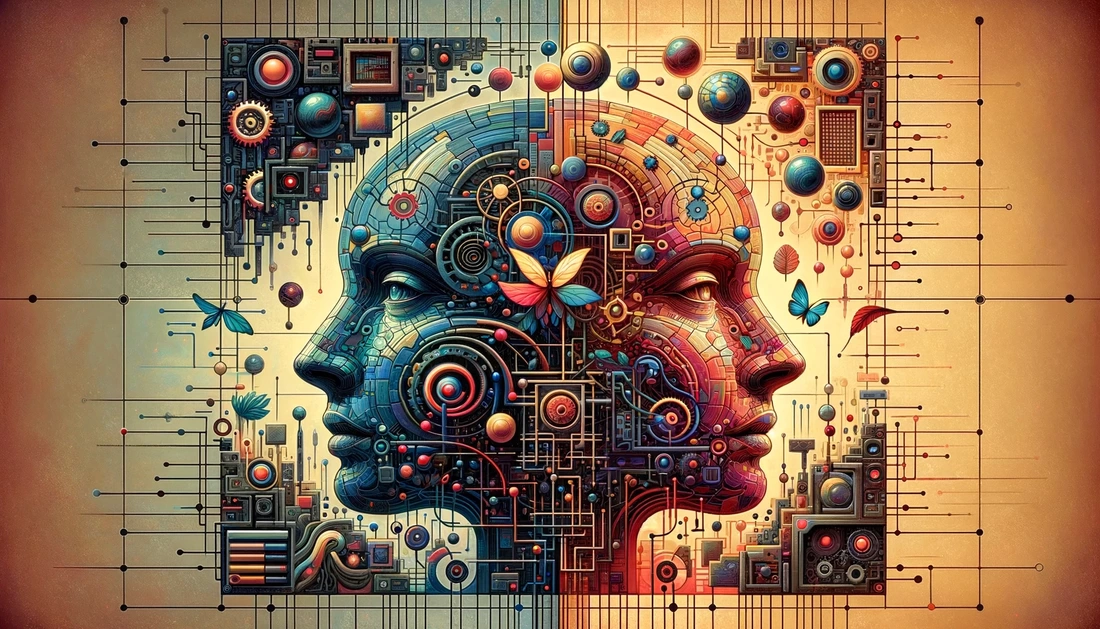 "Information is the currency of the universe." —James Gleick In the burgeoning field of AI and cybernetics, we stand at the cusp of a paradigm shift—a reimagining of the foundational principles that underpin our understanding of reality itself. This article delves into the tenets of the Cybernetic Theory, of Mind (CTM), a model that amalgamates the rigor of science with the vast potentialities of consciousness (observer-dependence, causality, teleology, phenomenality), offering a novel lens through which to view the mechanisms of mind and matter. As we explore these principles, we uncover a framework that transcends traditional boundaries, positioning consciousness as the bedrock of existence and viewing the universe not merely as a collection of separate entities but as an interconnected web of information processing and exchange. This new ontological model invites us to reconsider not just the nature of human thought and machine intelligence but also the very essence of what it means to be, heralding an era where the cybernetic fusion of technology and human mind shapes our future. by Alex M. Vikoulov 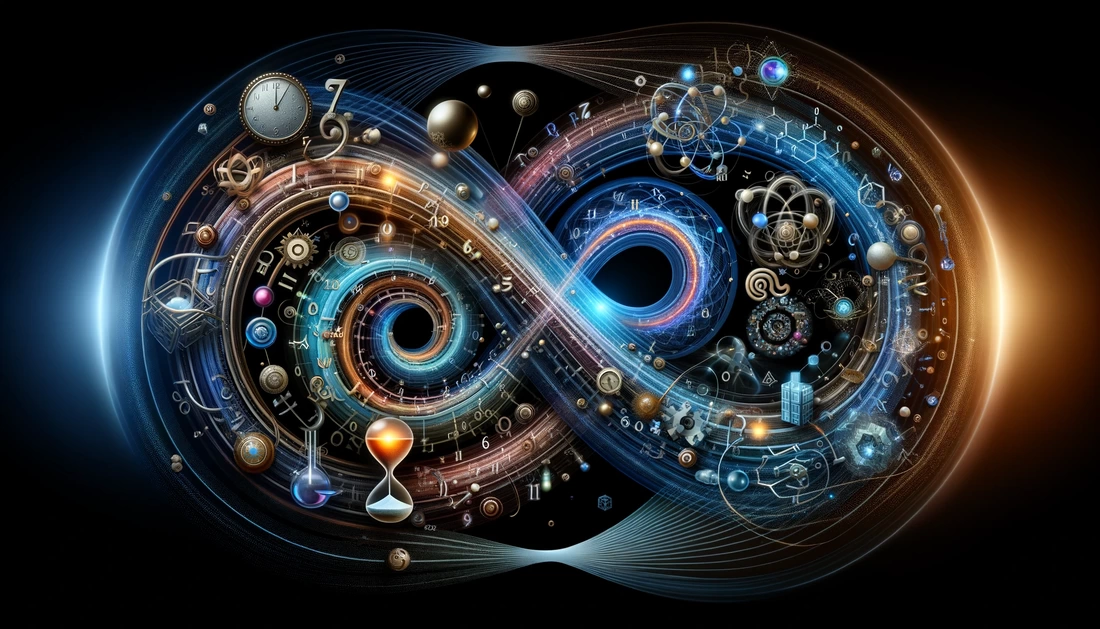 “In a sense, Nature has been continually computing the ‘next state’ of the Universe for billions of years; all we have to do — and actually all we can do — is ‘hitch a ride’ on this huge ongoing [quantum] computation.” —Tommaso Toffoli In the fascinating intersection of quantum computing and the human experience of time, lies a groundbreaking theory that challenges our conventional narratives: the D-Theory of Time. This theory proposes a revolutionary perspective on time not as fundamental but as an emergent phenomenon arising from the quantum mechanical fabric of the universe.
In my upcoming book with a working title Cybernetic Theory, the entire section is dedicated to the physics of time, where we discuss the D-Theory of Time, predicated or reversible quantum computing at large, which represents a novel framework that challenges our conventional understanding of time and computing. Here, we explore the foundational principles of the D-Theory of Time, its implications for reversible quantum computing, and how it could potentially revolutionize our approach to computing, information processing, and our understanding of the universe. by Alex M. Vikoulov 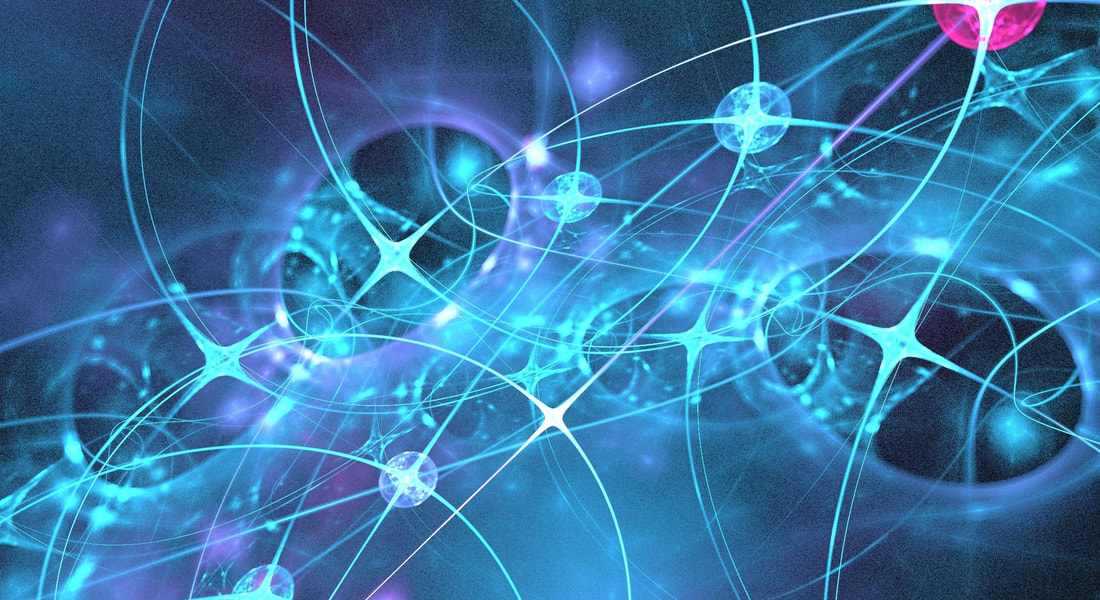 "Chaos is what we've lost touch with. This is why it is given a bad name. It is feared by the dominant archetype of our world, which is Ego, which clenches because its existence is defined in terms of control." - Terence McKenna Listen to this article ↴ From the vantage point of digital philosophy, the world is governed by a ceaseless battle of opposites. What appears as chaos on one stratum manifests as harmony and order on another, more elevated, level. Delving into the microscopic realm, we witness cells and microbes devouring each other in what seems like a miniature war. Yet, paradoxically, this microscopic carnage is a prerequisite for the healthy functioning of our human organism. Similarly, in the grand tapestry of Nature, a "food pyramid" delineates the roles of predator and prey, consumer and consumed. While it may look like a relentless competition, it's an intrinsic part of the natural ecosystem. Each element exists in relation to another, contributing to a larger, divine order. In this framework, even the act of "eating" each other and our environment is not anarchy but rather a structured dance choreographed by the laws of Nature, emergent behavior, and rules of self-organization, perhaps, set in motion by God himself. by Alex Vikoulov 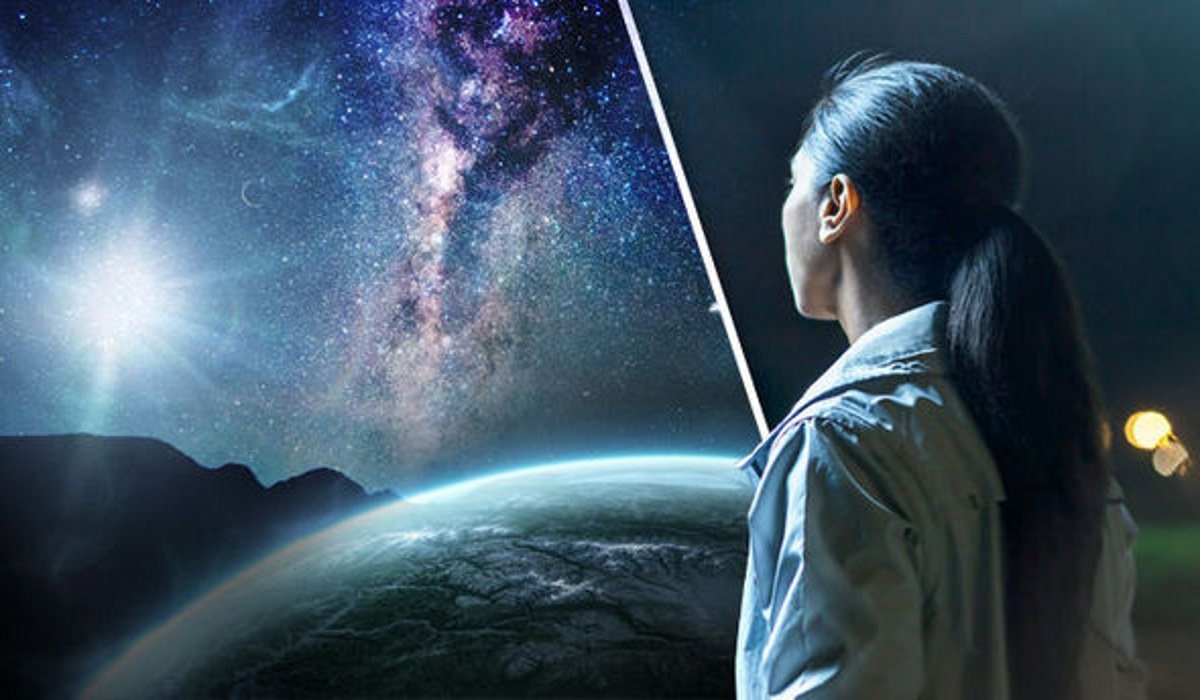 “Old Newtonian physics claimed that things have an objective reality separate from our perception of them. Quantum physics, and particularly Heisenberg's Uncertainty Principle, reveal that, as our perception of an object changes, the object itself literally changes.” –Marianne Williamson Listen to this article ↴ In the intricate landscape of consciousness studies, an interdisciplinary confluence of scientific inquiry, philosophical speculation, and elements of techno-mysticism emerges. This exploration aims to challenge conventional paradigms and proffer a multifaceted examination of the nature of the conscious mind. Among the humongous spectrum of available first-person experiences, the act of selecting a singular manifest phenomenon for awareness yields what I call a Conscious Instant (CI). A sequence of these perceptual frames constitutes what is generally known as the "stream of consciousness," which creates your continuous flow of time and your unitary sensation of reality. Video: What is Consciousness? Consciousness: Evolution of the Mind, Part I (cc)
The Quest for Ultimate Reality: Exploring Experiential Nirvana as a Path to Self-Transcendence3/29/2023 by Alex Vikoulov 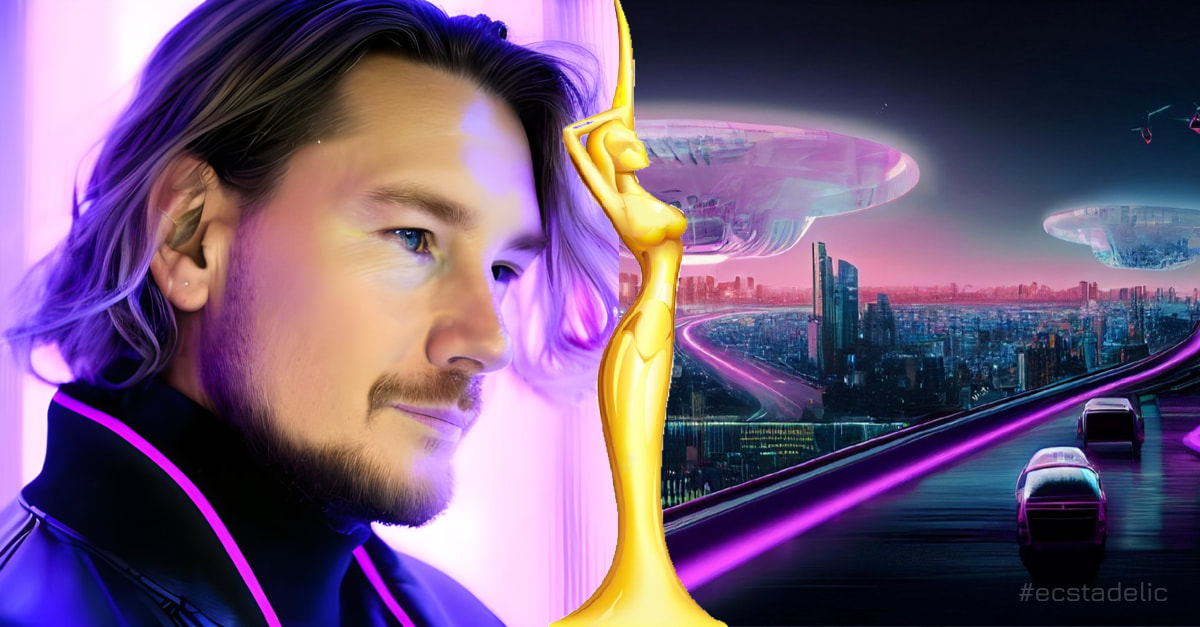 “Man suffers only because he takes seriously what the gods made for fun.” ―Alan W. Watts “What Nirvana?” you might immediately think, “there’s so much suffering in the world including ongoing problems in my own life!” According to Buddhist teachings, Nirvana is defined as a transcendent state in which there is neither suffering, desire, nor sense of self, and the subject is released from the effects of karma and the cycle of death and rebirth. Nirvana is thus associated with the highest state that someone can attain, a state of enlightenment. So, can the pursuit of experience lead to true enlightenment? Are we edging towards Experiential Nirvana on a civilizational level despite certain turbulent events?
|

Categories
All
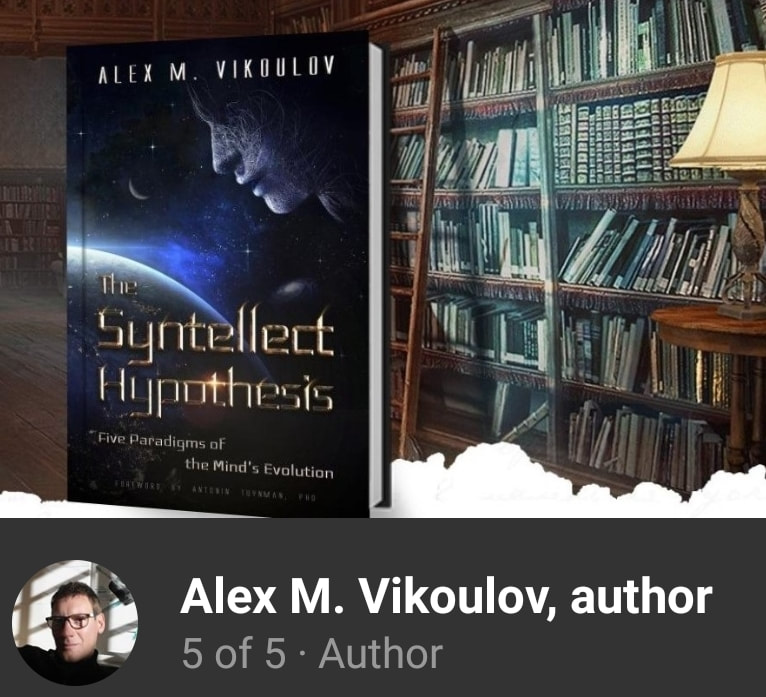
Recent Publications The Cybernetic Theory of Mind by Alex M. Vikoulov (2022): eBook Series The Syntellect Hypothesis: Five Paradigms of the Mind's Evolution by Alex M. Vikoulov (2020): eBook Paperback Hardcover Audiobook The Omega Singularity: Universal Mind & The Fractal Multiverse by Alex M. Vikoulov (2022): eBook THEOGENESIS: Transdimensional Propagation & Universal Expansion by Alex M. Vikoulov (2021): eBook The Cybernetic Singularity: The Syntellect Emergence by Alex M. Vikoulov (2021): eBook TECHNOCULTURE: The Rise of Man by Alex M. Vikoulov (2020) eBook NOOGENESIS: Computational Biology by Alex M. Vikoulov (2020): eBook The Ouroboros Code: Reality's Digital Alchemy Self-Simulation Bridging Science and Spirituality by Antonin Tuynman (2019) eBook Paperback The Science and Philosophy of Information by Alex M. Vikoulov (2019): eBook Series Theology of Digital Physics: Phenomenal Consciousness, The Cosmic Self & The Pantheistic Interpretation of Our Holographic Reality by Alex M. Vikoulov (2019) eBook The Intelligence Supernova: Essays on Cybernetic Transhumanism, The Simulation Singularity & The Syntellect Emergence by Alex M. Vikoulov (2019) eBook The Physics of Time: D-Theory of Time & Temporal Mechanics by Alex M. Vikoulov (2019): eBook The Origins of Us: Evolutionary Emergence and The Omega Point Cosmology by Alex M. Vikoulov (2019): eBook More Than An Algorithm: Exploring the gap between natural evolution and digitally computed artificial intelligence by Antonin Tuynman (2019): eBook Our Facebook Pages

A quote on the go"When I woke up one morning I got poetically epiphanized: To us, our dreams at night feel “oh so real” when inside them but they are what they are - dreams against the backdrop of daily reality. Our daily reality is like nightly dreams against the backdrop of the larger reality. This is something we all know deep down to be true... The question then becomes how to "lucidify" this dream of reality?"— Alex M. Vikoulov Public Forums 
Our Custom GPTs
Alex Vikoulov AGI (Premium*)


#ecstadelic collection (keyword-based design on products from apparel to home decor)
The Book Club collection (Your favorite book front cover on products from apparel to accessories)
Be Part of Our Network! *Subscribe to Premium Access Make a Donation Syndicate Content Write a Paid Review Submit Your Article Submit Your Press Release Submit Your e-News Contact Us
|