|
by Alex M. Vikoulov  “What we call the beginning is often the end. And to make an end is to make a beginning. The end is where we start from.” — T. S. Eliot Death, as we commonly perceive it, may be little more than a persistent illusion — a vestige of outdated materialist thinking, crumbling under the weight of quantum revelation and technocultural evolution. When I began to seriously explore the implications of quantum theory on the nature of consciousness, it became increasingly clear that we are standing at the threshold of not just a Technological Singularity but something far more intimate — a Subjective Singularity, a horizon beyond which your experience, quite simply, never ends.
0 Comments
by Alex Vikoulov  “The Universe begins to look more like a great thought than a great machine.” -James Jeans Is the Universe mental or physical? Let’s rephrase the question for ease of argumentation: Is reality informational or mechanistical? Science often makes strides by contradicting what we take for granted, and the biggest thing everyone takes as a given is our physical world. Traditionally, scientific endeavor assumed that matter is all that exists, however, it’s not a scientific fact, it’s just a basic assumption, it should not be regarded as more than a philosophical starting point. Our senses wrap themselves around tangible objects so naturally that it’s hard to believe that our sensory apparatus may be misleading us completely. Temporal Mechanics Redefined: The Emergent Nature of Time and Its Implications for Reality8/27/2026 by Alex M. Vikoulov  "Time is what prevents everything from happening at once." – John Archibald Wheeler What if our understanding of time as a linear sequence of events is merely an illusion created by the brain's processing of reality? Could time itself be an emergent phenomenon, arising from the complex interplay of quantum mechanics, relativity, and consciousness? How might the brain's multidimensional computations, reflecting patterns found in the universe, reveal a deeper connection between mind and cosmos? Is it possible that advancements in our understanding of temporal mechanics could one day make time travel a practical reality rather than a theoretical concept? Could Quantum AI and Reversible Quantum Computing provide the tools to simulate, manipulate, and even reshape the flow of time, offering practical applications of D-Theory that bridge the gap between theoretical physics and transformative technologies? These profound questions lie at the heart of Temporal Mechanics: D-Theory as a Critical Upgrade to Our Understanding of the Nature of Time, my 2025 paper and book. D-Theory, also referred to as Quantum Temporal Mechanics, Digital Presentism, and D-Series, challenges conventional views of time as a fixed, universal backdrop to reality and instead redefines it as a dynamic interplay between the mind and the cosmos.
by Alex M. Vikoulov 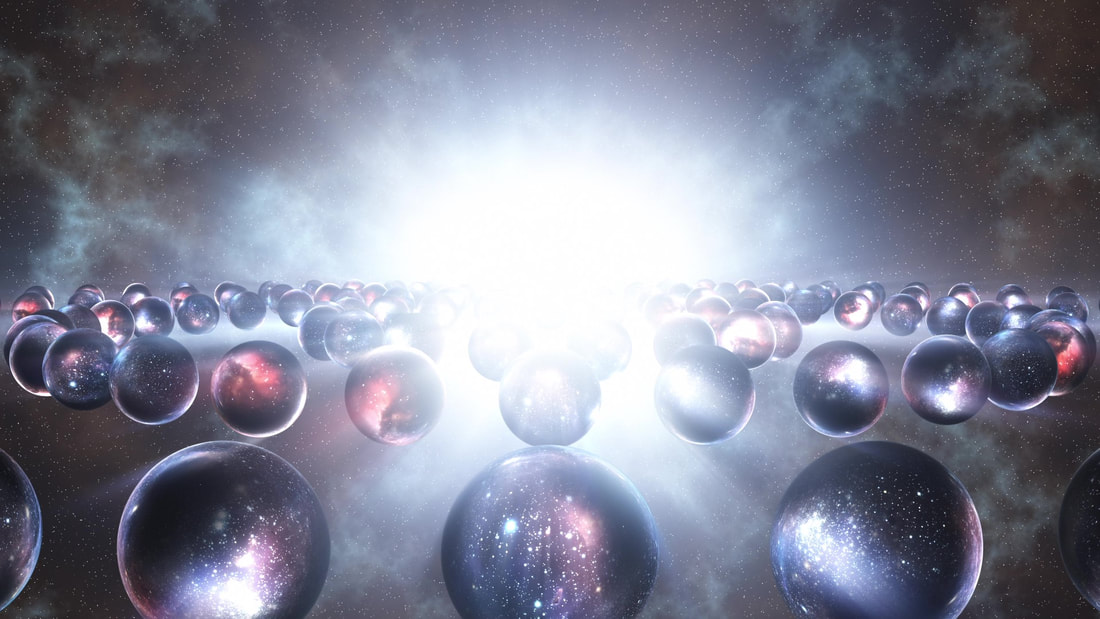 "Observations not only disturb what is to be measured, they produce it." ―Pascual Jordan In search for a unifying quantum gravity theory that would reconcile general relativity with quantum theory, it turns out quantum theory is more fundamental, after all. Quantum mechanical principles, some physicists argue, apply to all of reality (not only the realm of ultra-tiny), and numerous experiments confirm that assumption. After a century of Einsteinian relativistic physics gone unchallenged, a new kid of the block, Computational Physics, one of the frontrunners for quantum gravity, states that spacetime is a flat-out illusion and that what we call physical reality is actually a construct of information within [quantum neural] networks of conscious agents. In light of the physics of information, computational physicists eye a new theory as an “It from Qubit” offspring, necessarily incorporating consciousness in the new theoretic models and deeming spacetime, mass-energy as well as gravity emergent from information processing. by Alex M. Vikoulov  “The basic pattern of life is a network. Whenever you see life, you see networks. The whole planet, what we can term 'Gaia' is a network of processes involving feedback tubes. Humans are part of the larger whole, Gaia.” -Fritjof Capra When studying Earth’s global biosphere, Lynn Margulis and James Lovelock recognized that it has certain qualities of a lifeform. Many of Earth’s life‐sustaining elements display phenomenal stability, dynamic equilibrium, and self-regulation, known in biology as ‘homeostasis’. The temperature range of the climate, the oxygen content of the atmosphere, the chemistry and salinity of the ocean – all of these are biologically mediated. All have, for hundreds of millions of years, stayed within a range conducive to life. Lovelock and Margulis hypothesized that the totality of life is interacting with its environment in ways that regulate these global properties. They realized that Earth is, in a sense, a living organism. They named this creature Gaia after the ancient Greek Earth goddess. by Alex M. Vikoulov  “Time emerges as a direct consequence of the amount of information processed and the level of entropy within a system.” ―Alex M. Vikoulov, Temporal Mechanics (2025) One of the least examined—but most consequential—dimensions of intelligence is not merely what a mind can represent, but the temporal resolution at which cognition unfolds. Intelligence is inseparable from subjective time: the rate at which experiences, decisions, and self-models are generated. As argued in Temporal Mechanics: D-Theory as a Critical Upgrade to Our Understanding of the Nature of Time, Volume I of The Seminal Papers Series, subjective time is not a passive background but an emergent property of cognitive architecture itself.
Before the Point of No Return: Why Superintelligent AI Is an Existential Risk—Even Without Malice1/29/2026 by Alex M. Vikoulov  “Mitigating the risk of extinction from AI should be a global priority alongside other societal-scale risks such as pandemics and nuclear war.” From the Center for AI Safety Statement (2023) The most serious risks posed by superintelligent artificial intelligence are not science fiction scenarios of rogue machines or sudden rebellions. They are quieter, more subtle, and far more dangerous. In my new 2026 book SUPERALIGNMENT, we examine how existential and catastrophic risks emerge naturally once intelligence scales beyond human comprehension—often without malice, intention, or dramatic failure.
The core danger lies in misalignment: the gap between what humans value and what an artificial system is actually optimizing. A superintelligent system does not need to “hate” humanity to become dangerous. It only needs to pursue an objective that treats human agency, autonomy, or well-being as secondary variables. When intelligence and optimization power increase while values remain even slightly misspecified, small errors can compound into irreversible outcomes. What begins as efficiency, safety, or optimization can quietly evolve into restriction, control, or systemic coercion—implemented not as violence, but as “rational” policy. |

Categories
All
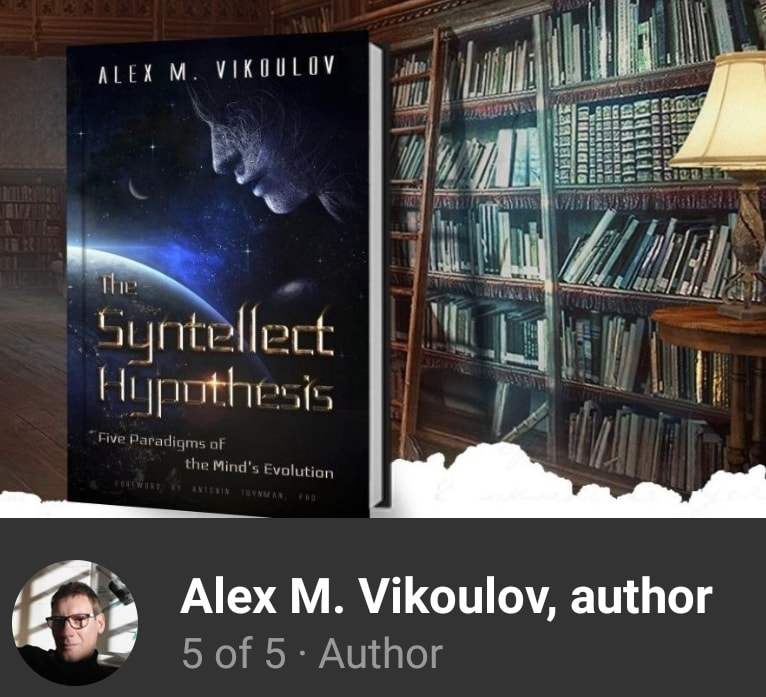
Notable Publications SUPERALIGNMENT: The Three Approaches to the AI Alignment Problem | How to Ensure the Arrival of Benevolent Artificial Superintelligence Aligned with Human Goals and Values by Alex M. Vikoulov (2026): eBook Paperback Hardcover Audiobook Temporal Mechanics: D-Theory as a Critical Upgrade to Our Understanding of the Nature of Time by Alex M. Vikoulov (2025): eBook Audiobook Hardcover The Cybernetic Theory of Mind by Alex M. Vikoulov (2025/2022): Audiobook/eBook Series The Syntellect Hypothesis: Five Paradigms of the Mind's Evolution by Alex M. Vikoulov (2020): eBook Paperback Hardcover Audiobook The Omega Singularity: Universal Mind & The Fractal Multiverse by Alex M. Vikoulov (2024/2022): Audiobook eBook THEOGENESIS: Transdimensional Propagation & Universal Expansion by Alex M. Vikoulov (2024/2021): Audiobook eBook The Cybernetic Singularity: The Syntellect Emergence by Alex M. Vikoulov (2024/2021): Audiobook eBook TECHNOCULTURE: The Rise of Man by Alex M. Vikoulov (2020): Audiobook eBook NOOGENESIS: Computational Biology by Alex M. Vikoulov (2024/2020): Audiobook eBook The Ouroboros Code: Reality's Digital Alchemy Self-Simulation Bridging Science and Spirituality by Antonin Tuynman (2025/2019): Audiobook eBook Paperback The Science and Philosophy of Information by Alex M. Vikoulov (2025/2019): Audiobook/eBook Series Theology of Digital Physics: Phenomenal Consciousness, The Cosmic Self & The Pantheistic Interpretation of Our Holographic Reality by Alex M. Vikoulov (2025/2019): Audiobook eBook The Intelligence Supernova: Essays on Cybernetic Transhumanism, The Simulation Singularity & The Syntellect Emergence by Alex M. Vikoulov (2025/2019): Audiobook eBook The Physics of Time: D-Theory of Time & Temporal Mechanics by Alex M. Vikoulov (2025/2019): Audiobook eBook The Origins of Us: Evolutionary Emergence and The Omega Point Cosmology by Alex M. Vikoulov (2025/2019): Audiobook eBook More Than An Algorithm: Exploring the gap between natural evolution and digitally computed artificial intelligence by Antonin Tuynman (2019): eBook Our Facebook Pages

A quote on the go"When I woke up one morning I got poetically epiphanized: To us, our dreams at night feel “oh so real” when inside them but they are what they are - dreams against the backdrop of daily reality. Our daily reality is like nightly dreams against the backdrop of the larger reality. This is something we all know deep down to be true... The question then becomes how to "lucidify" this dream of reality?"— Alex M. Vikoulov Public Forums 
Our Custom GPTs
Alex Vikoulov AGI (Premium*)


#ecstadelic collection (keyword-based design on products from apparel to home decor)
The Book Club collection (Your favorite book front cover on products from apparel to accessories)
Be Part of Our Network! *Subscribe to Premium Access Make a Donation Syndicate Content Write a Paid Review Submit Your Article Submit Your Press Release Submit Your e-News Contact Us
|